Swatch 1
How weaving works
Weaving interlaces two sets of threads at right angles. It is one of humanity's oldest technologies, and every loom ever built is a way of doing the same simple job faster and more evenly.
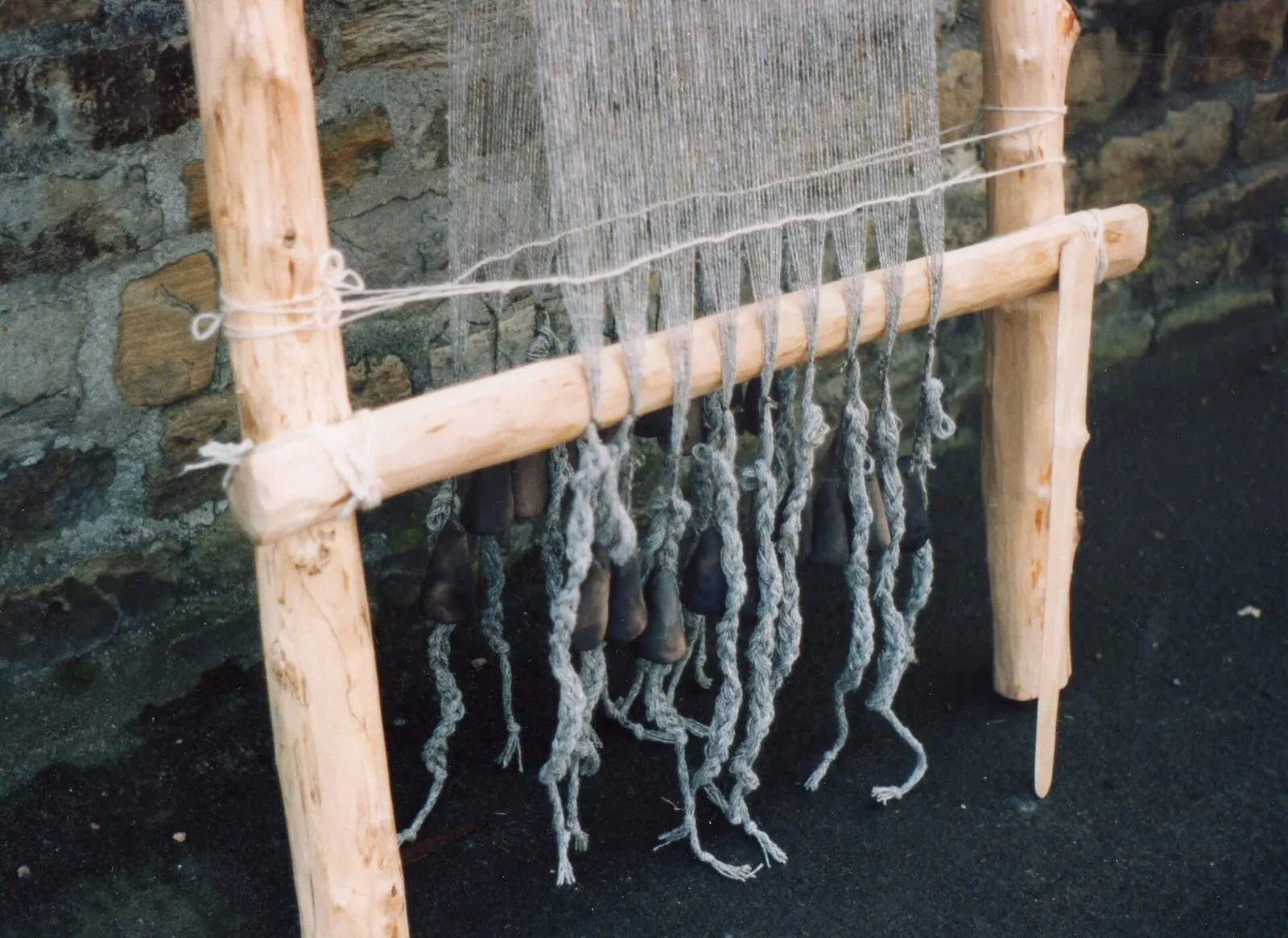
Warp and weft
The warp is the set of threads stretched on the loom under tension. They run the length of the finished cloth. The weft is the thread woven across them, from side to side. Each pass of weft is called a pick or row, and the firm edges where the weft turns back are the selvedges.
Opening a shed
Weaving would be painfully slow if you had to lift every other warp thread by hand. Looms solve this by raising a set of warps all at once, opening a gap called the shed, through which the weft is passed in one movement. The next row uses the opposite set of warps. On simple looms the shed is opened with a shed stick or string loops called heddles; on floor looms, pedals lift frames of heddles called shafts.
Weave structures
| Structure | How it works | Character |
|---|---|---|
| Plain weave | Over one, under one; reverse on the next row | Strong, simple, the basis of most cloth |
| Twill | Over two or more, stepping along each row | Diagonal lines, as in denim; drapes well |
| Satin | Long floats with widely spaced interlacings | Smooth and glossy, less hard-wearing |
| Weft-faced | Weft packed so densely it hides the warp | Used in tapestry and rugs |
Kinds of loom
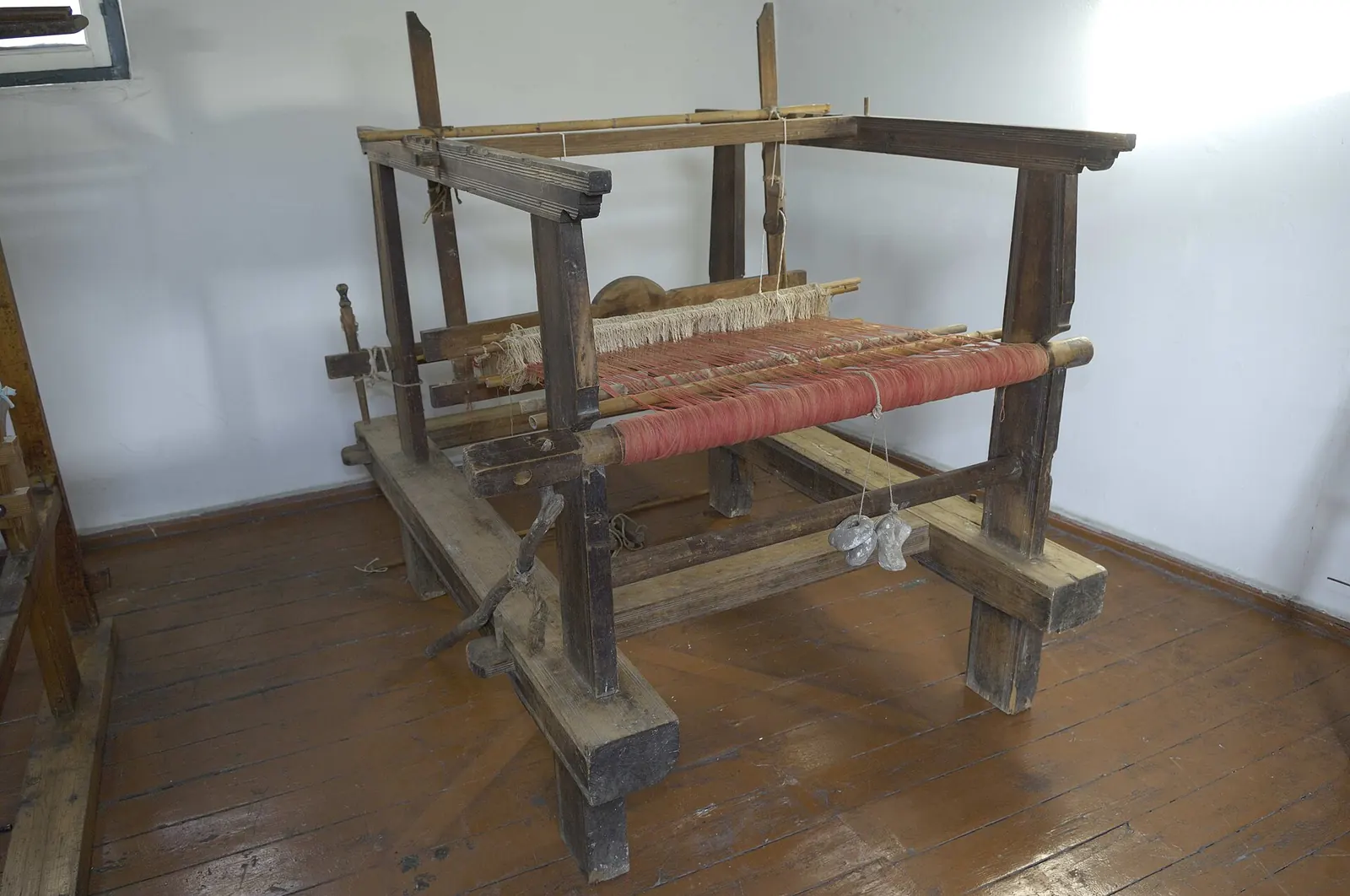
| Loom | Notes |
|---|---|
| Warp-weighted | Ancient upright loom; warps hang from a bar, tensioned by weights |
| Backstrap | Portable; the weaver tensions the warp with their body |
| Frame loom | A simple rectangle; ideal for small tapestries and learning |
| Rigid heddle | A slotted reed lifts alternate threads; good for scarves and fabric |
| Floor loom | Pedal-operated shafts for long lengths and complex patterns |
| Tapestry loom | High-warp (upright) or low-warp (horizontal) looms for pictures in yarn |
A very old craft
Impressions of woven fabric on fired clay show people were weaving tens of thousands of years ago, and loom weights are among the most common finds on ancient settlement sites. For most of history, spinning and weaving took up a huge share of everyday work. Mechanised looms transformed the textile industry in the 18th and 19th centuries, but hand weaving has continued as both a craft and an art.
Ends and picks. Weavers describe cloth density as "ends per inch" (warp threads) and "picks per inch" (weft rows), or per centimetre.
Fibres for weaving
| Fibre | Character | Typical use |
|---|---|---|
| Wool | Springy, warm, packs down well | Tapestry weft, blankets |
| Cotton | Smooth, strong, little stretch | Warp, tea towels, cloth |
| Linen | Very strong, crisp, softens with use | Warp, table linen |
| Silk | Fine, lustrous, strong | Fine cloth, scarves |
Warp yarn has to survive constant tension and rubbing, so it should be strong and smooth. Weft yarn can be softer and more decorative, because it isn't under tension in the same way.
Questions weavers ask
Is knitting a kind of weaving?
No. Knitting makes fabric from interlocking loops of a single thread, which is why it stretches. Weaving interlaces two separate sets of threads at right angles.
Which loom should I start with?
A frame loom for wall hangings and tapestry, or a rigid heddle loom if you want to make scarves and fabric. Both are affordable and quick to learn.